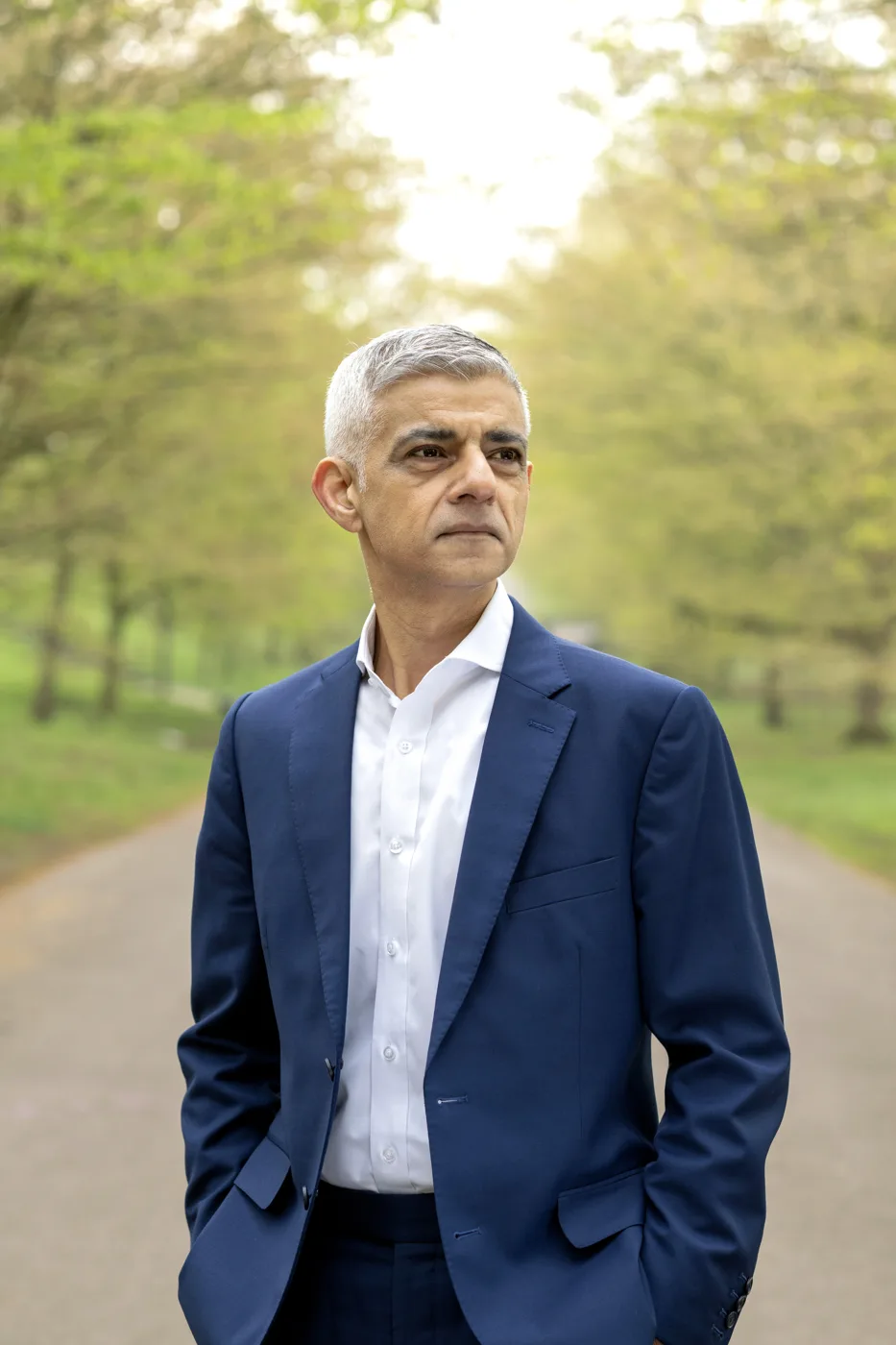

A YouGov poll for City Hall found 65% of Londoners see a lot or a fair amount of climate disinformation on social media. Sadiq Khan will raise it at COP31.
Sixty-five per cent of Londoners believe there is “a lot” or “a fair amount” of climate disinformation on social media, according to a YouGov poll for City Hall published on Thursday 12 November. Sadiq Khan, the Mayor of London, will use the finding to ask world leaders at COP31 to act together against misleading claims about climate change.
YouGov questioned 1,128 London residents aged 18 and over between 16 and 25 October 2026 and weighted the answers to represent all adults in the capital, Lewisham’s included. City Hall has not published a borough breakdown.
What it means for Lewisham
The poll measures what Londoners think they see online, not how much false material is actually out there. Where it touches Lewisham most directly is the subject the Mayor has chosen to make his case with: the Ultra Low Emission Zone and the air people breathe.
Residents had a reminder of that this week, when City Hall issued a high air pollution alert for London, Lewisham included, for Tuesday 10 November. The trip to Türkiye is the same one on which the Mayor is presenting City Hall’s estimate that this summer’s heatwaves cost London around £2.5 billion.
A first for a Mayor of London
COP31, the United Nations climate conference, is being held in Antalya, Türkiye. City Hall says Sadiq Khan will be the first Mayor of London to speak at the World Leaders’ Summit at a COP, addressing leaders from the main stage, a slot normally kept for heads of state and government.
He is expected to argue that falsehoods about the climate damage public trust, weaken democratic debate and risk holding back action that improves health, creates jobs and attracts investment.
“Climate disinformation is like a one-two punch to the planet and democracy,” he is expected to say. “But here in Türkiye, we’re calling on the world to get its guard up to defend itself and mount a comeback, to deal a knockout blow to the dark forces distorting debate.”
As elected co-chair of C40, the network of global cities, he will urge national leaders to work with cities to challenge disinformation and build public confidence in climate action.
The ULEZ campaign he will cite
The Mayor will describe London’s experience of the zone’s 2023 expansion as an early warning for other countries.
“While we act on the scientific consensus, the climate deniers and delayers are playing dirty with one last trick up their sleeve: climate disinformation,” he is expected to say. “London is no stranger to lies. When we expanded our clean air zone, now the largest in the world in 2023, we faced one of the most sophisticated disinformation campaigns ever seen. We overcame it and won. But evidence from all five continents shows London was just the canary in the coal mine.”
City Hall points to a 2023 investigation by the social media analysts Valent Projects, which found around 3,700 apparently inauthentic accounts amplifying posts against the ULEZ expansion on X, then still called Twitter. Valent put the cost of the operation at no less than £168,000 on X alone, judged from the price of bought followers and automation software. It did not establish who was behind it.
Children’s lungs and roadside pollution
The Mayor will hold up one study as the kind of independent evidence he says politicians must stand behind. The Children’s Health in London and Luton (CHILL) study, led by Queen Mary University of London, funded by the National Institute for Health and Care Research and published in The Lancet Public Health, recruited more than 3,400 primary school children in central London and in Luton and followed them for five years after the ULEZ began in central London in 2019.
In the London group, the share of children with clinically impaired lung function fell from 14 per cent to 9 per cent. In Luton, the comparison town, it fell from 9 per cent to 7 per cent. The researchers linked the cleaner air after the ULEZ to faster lung growth. The children studied were in central London and Luton, not Lewisham.
A separate assessment of the zone and its expansions, cited by City Hall, estimates that roadside nitrogen dioxide in central London is 54 per cent lower than it would otherwise have been.
City Hall’s other figures
Alongside the poll, City Hall published these numbers for London as a whole:
- Buses: the zero-emission bus fleet has grown to more than 3,000 vehicles since Sadiq Khan was first elected.
- Trees and green space: Mayoral funding has supported the planting of more than 640,000 trees and the creation or improvement of 900 hectares of green space.
- New buildings: London Plan policies saved 193,700 tonnes of CO2 from new buildings between 2021 and 2025, which City Hall compares to 164,000 return flights from London to New York.
- Green economy: in 2023 to 2024, London’s low-carbon and environmental goods and services businesses made £54.9 billion in sales, with more than 20,000 firms employing over 341,000 people, according to the London Low Carbon Market Snapshot 2025.
“We often talk about climate action as if it were a question of sacrifice,” the Mayor is expected to say. “But look at what we’ve delivered: health, happiness, and opportunity, not in some distant decade but right now.”
He is expected to finish: “It’s time to resist the attacks and stand up for the facts, with a relentless focus on unlocking the finance and expertise we need to fund climate action and adaptation around the world. London and other great cities around the world are showing we can overcome this challenge, we can win this fight and we can create a fairer, greener, healthier and more prosperous planet for everyone.”
The poll, the study details and the figures come from the Mayor of London’s press office.
Have your say