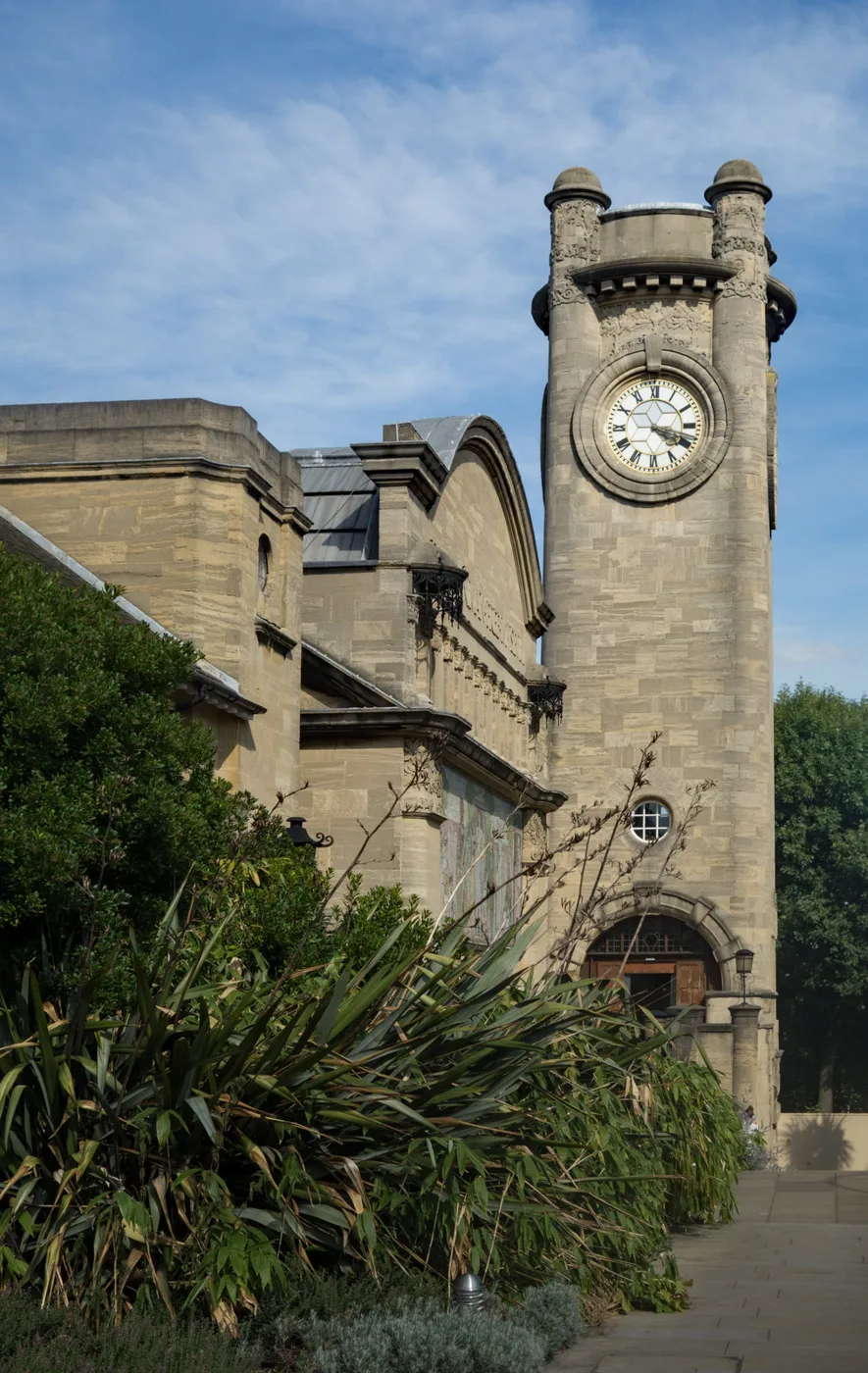

Un-Collectable, a free Horniman display of over 100 South West Asian and North African community works, opens in Forest Hill on 4 December after a free Late.
Un-Collectable / منّا وفينا, a free display of more than 100 contributions from South West Asian and North African (SWANA) communities and their diasporas, opens at the Horniman Museum and Gardens in Forest Hill on Friday 4 December. A free Museum Late, A Night of Belonging, marks the opening the evening before.
Overview
- Opens: Friday 4 December, free to visit
- Opening night: Museum Late: A Night of Belonging, Thursday 3 December, 5.30pm to 9.30pm, free, booking advised
- What it is: writing, photographs, illustrations, embroidery and textile art from SWANA communities, shown beside belongings in the Horniman’s collection
- Curated by: Hekayyatna with Heba Abd el Gawad, the Horniman’s Senior Curator of Anthropology
- Where: Horniman Museum and Gardens, 100 London Road, Forest Hill SE23 3PQ
Belongings, not objects
The display starts from the idea that museum collections are not simply objects but belongings, “valuables that were part of people’s lives and communities long before they entered a museum”, the Horniman says. A museum can collect a photograph, a sketchbook or a piece of embroidery, the museum says, “but it cannot collect the context, skills, stories, and communities that give them meaning.”
The contributions sit alongside belongings in the Horniman’s care. They include:
- Writing by community members, gathered through workshops, summer events and an online open call: poems, re-written labels, complaints, dreams and family histories, some told in the voices of belongings taken from their origins.
- Photographs by Abbas Raad, a photographer based in Iraq, and illustrations by Kurdish artist Dilshad Hama Amin, showing how local creatives picture their own communities. They hang in contrast with the sketches and photographs by Western envoys to the region held in the Horniman’s collection, which the museum describes as cultural stereotypes.
- New writing by four authors from Gaza, Haneen Hussam, Nourhan Abushahin, Ruba Khalid Al-Faleet and Malak Mamdouh, commissioned with Zines from Gaza / Coastal Lines Press.
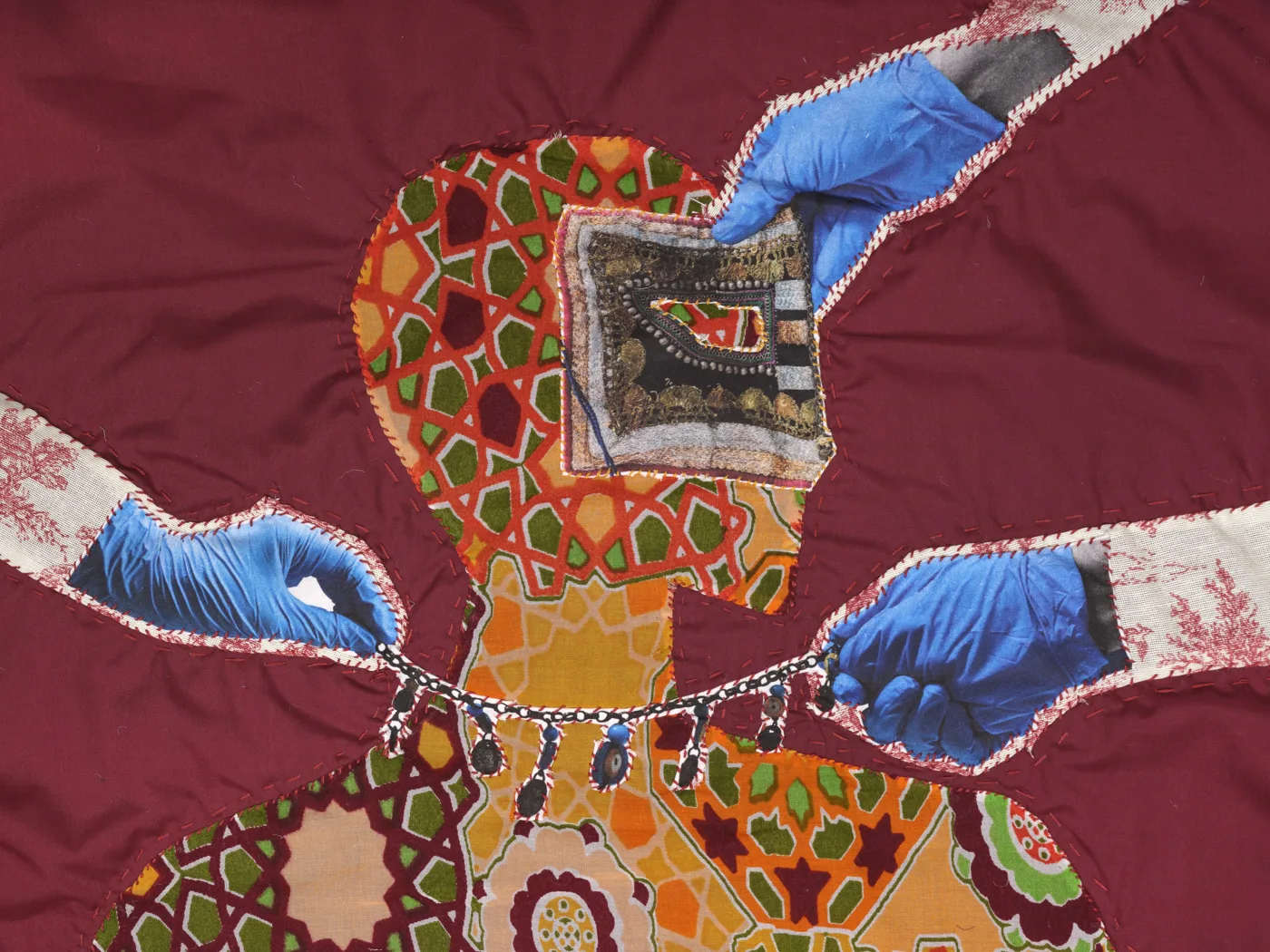
A finished thobe and gloved museum hands
Two newly commissioned artworks are among the contributions. Haya Natsheh’s (Un)Finished Thobe is embroidery on a full-size photographic print of a thobe, a full-length Palestinian dress in the Horniman’s care. It completes the Tatreez design that the dress’s original, unknown maker left unfinished.
Halima Ibrahim’s textile collage shows a figure holding protective belongings while gloved museum hands reach in from the edges. The museum says it asks: “when belongings are taken from their keeper, what do museums claim to protect?”
Murals by Palestinian Iraqi artist Yasmine Kadhim turn patterns from the Horniman’s SWANA collection into illustrated “stamps” for visitors to spot. Visitors can add to the display themselves, writing what they know on luggage tags and adding to a community wall that grows through the run.
A zine, Reclaimed: an anthology by authors from Gaza, published by Coastal Lines Press: Zines from Gaza, will be on sale in the Horniman shop. The museum’s event page says all proceeds go back to the authors.
‘We grew up learning about our own histories through the glass’
Al Shaibani, co-founder of Hekayyatna, said: “Like many people in our communities, we grew up learning about our own histories through the glass of museum cabinets. When we founded Hekayyatna, one of our aims was to create a platform for the stories of our communities, our elders and our friends, in their own words. Un-Collectable brings those voices into the museum itself, and we hope this inspires more projects and museums to explore community-led curation.”
Heba Abd el Gawad, the Horniman’s Senior Curator of Anthropology, said: “As a curator, I have privileged access to this heritage, yet as an Egyptian I meet my ancestors in acid-free boxes, and my wider SWANA communities through harmful records. I am part of the museum but also part of the communities that museums continue to harm. To me, this exhibition is one way to work in museums without being complicit. The community contributions challenge us to ask whose needs are being served by museums’ care and protection, and what must change for communities to decide how their own heritage is cared for.”
The display rests on an Amanah agreement, Arabic for shared trust, between Hekayyatna and the Horniman. Under it the museum takes responsibility for carrying community knowledge and authorship into its records and its future care of the collection, beyond the end of the exhibition.
Two titles that say different things
The Arabic and English titles are deliberately different, the museum says. The Arabic title, منّا وفينا, translates as “From Us, Within Us”; the English title, Un-Collectable, translates into Arabic as ما لا يقتني.
Opening night on 3 December
Museum Late: A Night of Belonging runs from 5.30pm to 9.30pm on Thursday 3 December, curated by Hekayyatna. Tickets are free, but the museum advises booking in advance.
The event page lists DJ Basma, host of Khartoum Arrivals on NTS Radio, and Al Awde Zaffa performing Palestinian, Lebanese, Syrian and Iraqi dances with live drumming. Drop-in workshops run from 6.30pm to 8pm: Tatreez embroidery with Haya Mustafa Natsheh, writing with Mel Sevinc and calligraphy with Yasmine Kadhim. There is also henna, food from Baytna 4 Refugees, tea from The Algerian Tea Company and a craft market.
The display is part of (Re)Claimed: Liberating South-West Asia and North Africa (SWANA) in UK Museums, a community project developed by Hekayyatna, the Horniman and UCL, supported through the ESRC Impact Acceleration Account at UCL Innovation & Enterprise.
The rest of the museum’s December programme, including the Christmas market on 6 December, is in our Horniman December guide.
Source: Horniman Museum and Gardens press office.
Have your say